Federal judge refuses city’s request to review Rikers receivership order
/
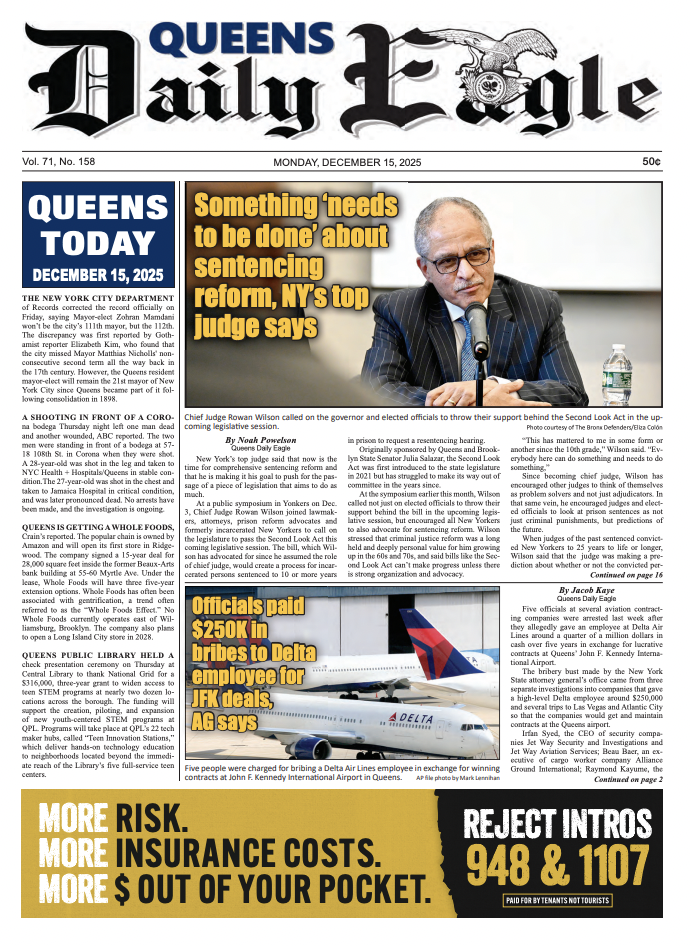
A federal judge on Thursday rejected the city’s request to get her to reconsider her May ruling, which found that Rikers Island should be put under the control of a third-party receiver. Eagle file photo by Ryan Schwach
By Jacob Kaye
A federal judge on Thursday dealt another blow to the Adams administration’s efforts to retain control of Rikers Island, denying a motion that sought to undo her decision to put the troubled jail complex under federal receivership.
Federal Judge Laura Swain, who is overseeing the decade-old detainee rights case Nunez v. the City of New York, rejected the city’s attempt to get her to reconsider the major ruling she made in May, ordering the city’s jails to be placed under the control of a third-party receiver known as a remediation manager. Swain denied a related request from the city on Thursday to name DOC Commissioner Lynelle Maginley-Liddie the “compliance director,” a role the city proposed in place of the soon-to-be-appointed receiver.
The ruling comes as Swain is considering a shortlist of candidates recommended to her to serve as remediation manager, a position that will be answerable only to the judge and will, in many cases, supplant the power of the DOC commissioner and the mayor. Swain’s decision to put Rikers into a receivership came after she said the city had failed for a decade to quell the violent conditions and dysfunction in the city’s jails and in the agency that runs them.
In her Thursday ruling, Swain rejected a claim from the city that it had new evidence since her May ruling that suggested that current DOC leadership was turning conditions on Rikers around and that a receiver was no longer necessary.
The city cited a report from Swain’s federal monitor, Steve J. Martin, that was issued days after her receivership ruling. While the report said that “momentum toward reform has begun to shift in the right direction,” it also noted that “much more work remains to address the high risk of harm that is pervasive throughout the system and the entrenched culture and dysfunctional practices that perpetuate it.”
But Swain said the evidence in the report, though it was issued after her order, was not new. The data in the report was from July 2024 through December of that year, and much of it was collected by the DOC itself. Swain said the city had ample opportunity to present the data prior to her ruling, and did in some cases.
“Presenting the same evidence in a different form does not make that evidence new, and defendants are not entitled to ‘take a second bite at the apple’ by repackaging evidence that the court already considered, even if their submission postdated the court’s opinion,” Swain said in her Thursday ruling.
The judge also stood by her earlier ruling rejecting the city’s request to name Maginley-Liddie as the receiver. In May, Swain said the commissioner, who was appointed to the post by Mayor Eric Adams in December 2023, wasn’t independent enough to serve as the remediation manager.
The judge said on Thursday that the city offered little to no evidence that she should reconsider the ruling beyond saying that they disagreed with the judge and “wish to litigate the issue anew.”
“Defendants have not provided any basis…that would counsel the court to revisit its conclusions regarding these portions of the [remedial manager opinion],” Swain said.

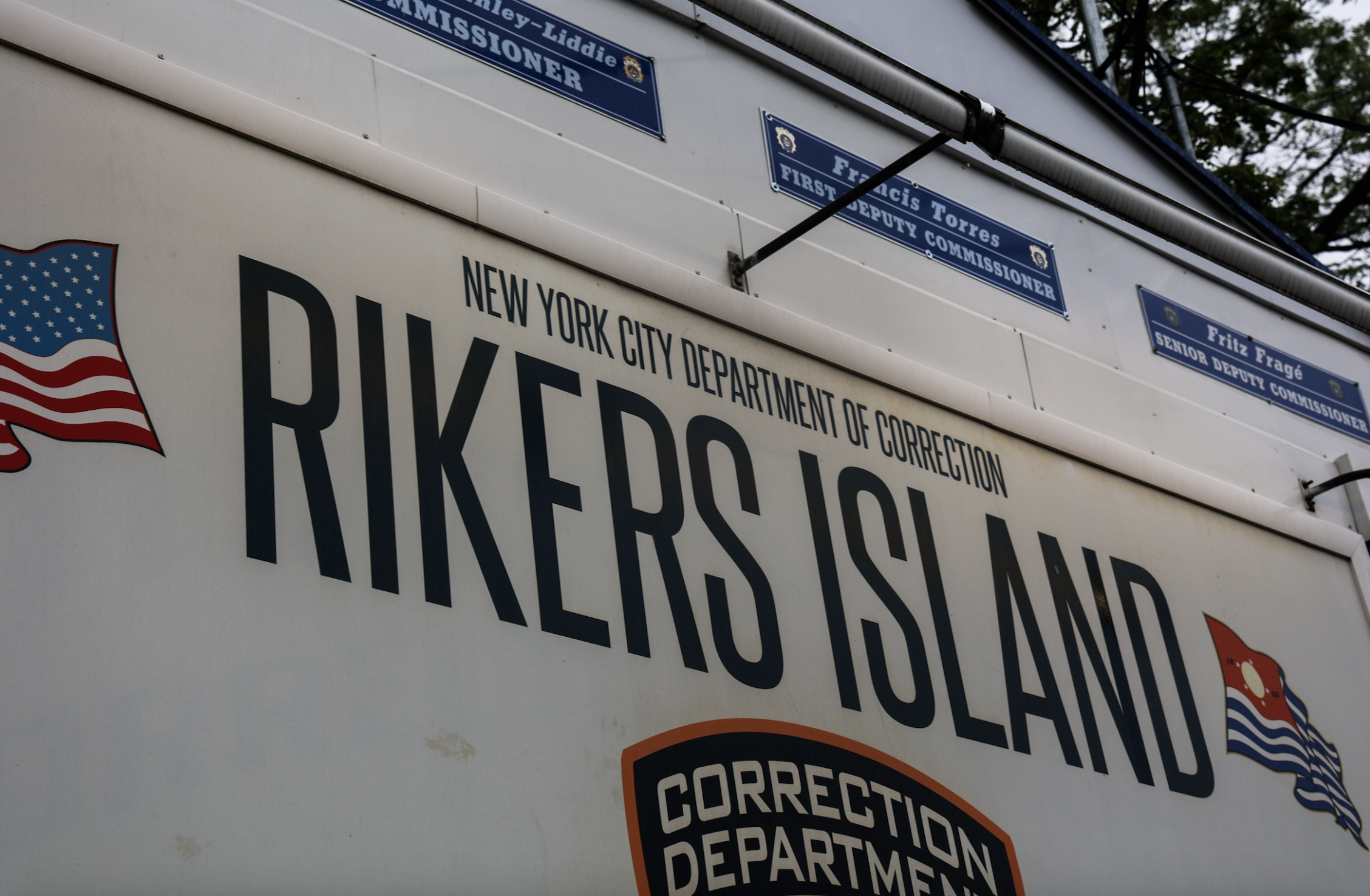
A judge on Thursday rejected the city’s request to install DOC Commissioner Lynelle Maginley-Liddie as “compliance director,” a job that would see her work with the judge to bring the city in compliance with the ongoing civil rights case known as Nunez v. the City of New York. Photo via DOC/X
The mayor’s office declined to comment on the ruling and directed the Eagle to the Law Department. The Department of Correction did not respond to request for comment.
A spokesperson for the Law Department said the city was "reviewing the decision and…contemplating next steps.”
The Legal Aid Society, which represents Rikers’ detainees alongside Emery Celli Brinckerhoff & Abady and the U.S. attorney’s office for the Southern District of New York, celebrated Swain’s decision on Thursday.
“Today’s decision illustrates that the court meant what it said when it ruled that independent oversight is necessary to end the ongoing violence and constitutional violations in New York City’s jails,” a LAS spokesperson said.
With the city’s motion rejected, Swain will continue with the receiver selection process, which began in earnest in August when the city and lawyers for the detainees gave the judge their respective lists of candidates.
The list was narrowed down later that month when the federal monitor selected a shortlist of names from the over two dozen candidates who applied for the job.
The list of names was kept off the public docket, and it’s unclear when Swain will make her selection.
The receiver’s main job will be to tackle the nearly two dozen court orders Swain found the city in contempt of in November 2024.
While their powers will be confined only to actions related to the court orders, their influence could potentially be felt in all corners of the DOC.
The receiver will be able to make changes to DOC policies, procedures, protocols and systems related to the Nunez court orders; review, investigate and discipline officers who violate use of force rules; hire, promote and deploy staff throughout the jails; renegotiate contracts the city has with the correctional officers’ union, which has long opposed receivership; and ask Swain to “waive any legal or contractual requirements that impede [the receiver] from carrying out their duties.”
The remedial manager, whose powers will remain until the judge finds the city is in compliance with the court orders, will also be allowed to direct the DOC commissioner and any other DOC executive in regards to the Nunez orders.
But the full scope of the receiver’s powers is still being hashed out.
In September, the federal monitor sent Swain a 481-page report that included a lengthy section regarding the specifics of the receiver’s jobs and objections to the job description from both the city and the Legal Aid Society.
Swain has yet to rule on the objections but said on Thursday that she would do so “in due course.”
Seven people have died either in DOC custody or shortly after having been released from it since Swain’s May ruling.