City Council passes bills that aim to improve voting access for Rikers detainees
/
The City Council overwhelmingly passed two pieces of legislation on Thursday to make voting easier for Rikers Island detainees. Eagle file photo by Ryan Schwach
By Ryan Schwach
Days before Queens voters began casting ballots in this year’s general election, the City Council passed two pieces of legislation that aim to make it easier for detainees on Rikers Island to cast their ballots.
The bills passed overwhelmingly on Thursday after a long fight from advocates who said the approximately 7,000 New Yorkers being held on Rikers are disenfranchised by an ineffective voting system on the notorious prison island.
Ultimately, allowing detainees to vote in person on Rikers would be difficult and would require legislation at the state level, the Board of Elections and Board of Correction testified at a hearing earlier this year.
The legislation passed on Thursday aims to improve the current mail-in ballot process.
Sponsored by Public Advocate Jumaane Williams and Queens Councilmember Selvena Brooks-Powers, the two bills will require the Board of Elections and the Department of Correction to report on voting activities on Rikers and make it easier to cure ballot defects.
“In the outside world, a person's ballot that’s rejected would be notified, and they would have the opportunity to address any issues – the same is often not true of those on Rikers Island,” Williams said. “In practice, only some of those who requested a ballot receive it, and only some of those ballots are counted, leaving only a small percentage of the eligible population actually able to vote. This would not be acceptable in the outside world, and we should not accept it in Rikers either.”
The public advocate’s bill, Intro 797-A, would require DOC to report annually on voting activities in city jails, including the numbers of completed voter registration forms, absentee ballots distributed to incarcerated individuals, and events held to promote voting.
Brooks-Powers’ bill would require the creation of procedures for curing ballots submitted by Rikers detainees.
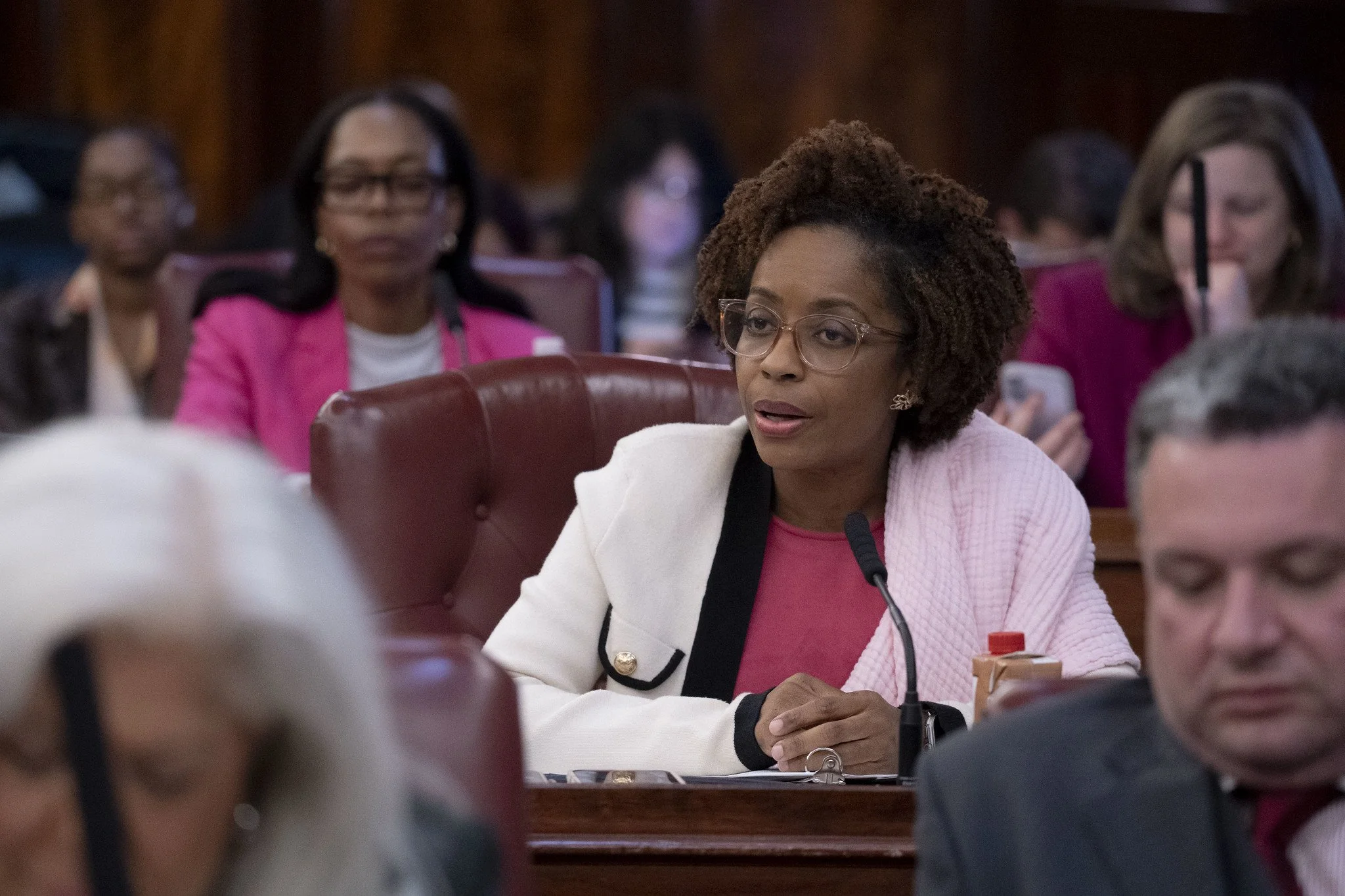
Queens Councilmember Selvena Brooks-Powers and Public Advocate Jumaane Williams sponsored legislation to improve voting systems on Rikers Island that were passed by the City Council on Thursday. Photo by Gerardo Romo/NYC Council Media Unit
“I believe we have a responsibility to ensure that the rights of those in our custody are not only recognized, but meaningfully protected,” the councilmember said in a statement. “[The bills] take important steps toward that goal by strengthening procedures to help incarcerated voters correct ballot errors, improving transparency around voter participation, and holding our City accountable for addressing gaps in the process.”
“A ballot should not be thrown out for an error that could have been caught,” Brooks-Powers added inside the Council chambers Thursday.
Only around 335 of the approximately 6,000 eligible detainees on Rikers cast absentee ballots in the last general election, officials said during an April hearing.
In 2025, around 47 percent of the absentee ballots handed out to detainees in the city’s jails were returned to the city’s BOE for tallying, according to the Vote in NYC Jails Coalition. Statewide, the return rate is a little more than 73 percent for incarcerated voters.
Advocates say that expanding voting access for Rikers detainees supports public safety efforts to address mass incarceration and helps reduce recidivism.
“Just because a person is incarcerated does not mean they do not have a vested interest in their communities, including who represents them in government,” Williams said. “Voting is one of a number of pro-social behaviors associated with reduced recidivism.
During the hearing on the legislation in April, DOC officials said that the ballot curing bill does face some “operational realities.”
“The bill would appear to involve the Department of Correction in the administration of elections – something the Department is not set up to do,” Nell Colón, the deputy commissioner of programs and community partnerships at DOC, said. “There are also operational challenges related to the fluid nature of the jail population. Individuals may enter and leave custody with little notice, and the Department does not always have reliable forwarding contact information. Creating a parallel process that depends on DOC receiving and redistributing cure notices would impose substantial operational difficulties.”
“The Department remains committed to working with partners to support lawful and workable approaches to expanding access to voting and ensuring that all votes can be counted,” Colón added.
The Board of Elections did not respond to a request for comment.
This story had been edited to reflect the Department of Correction’s April testimony at 4:04 p.m. on Monday, October 26, 2026.