City quietly scraps premier community policing program
/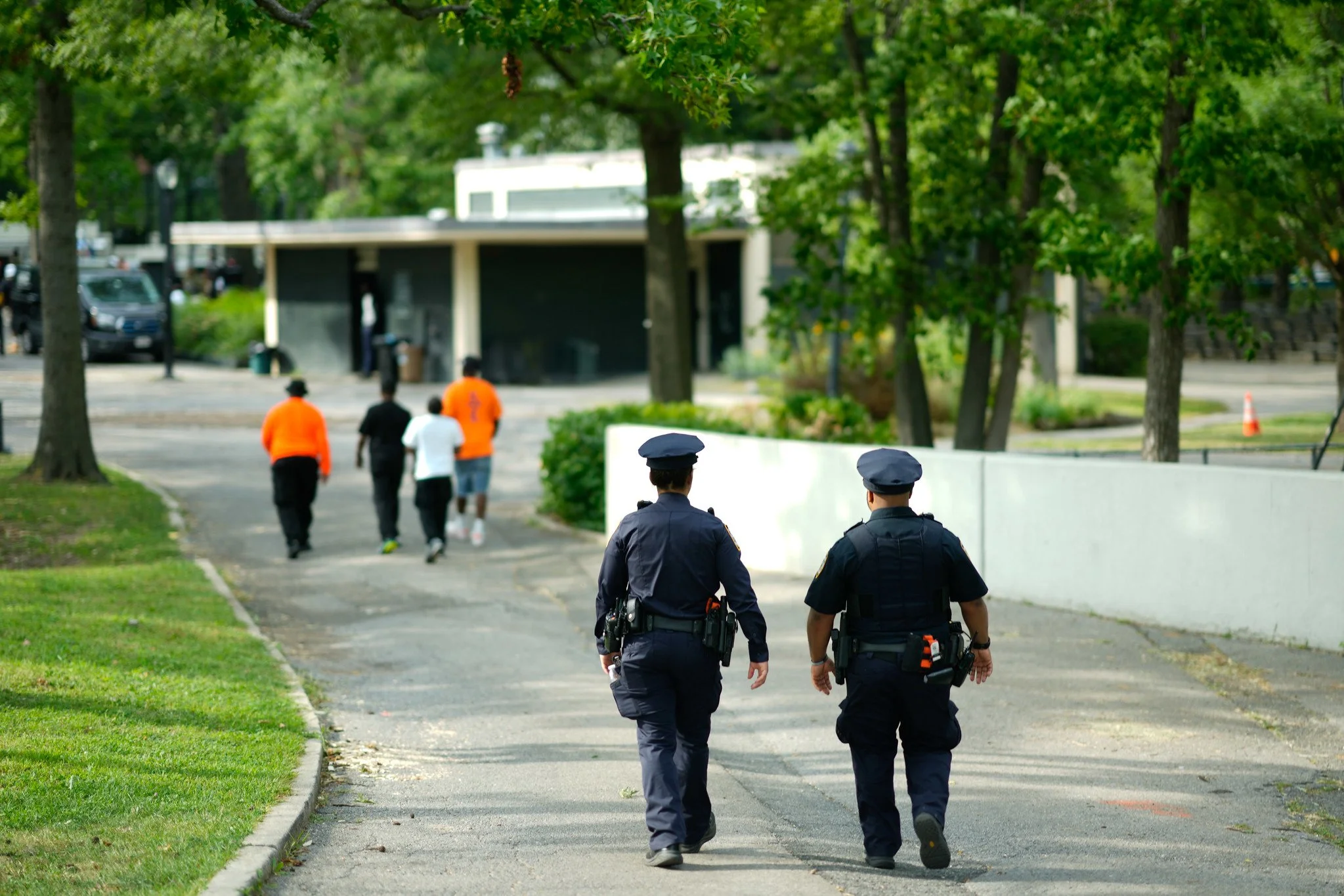
The NYPD and the city have ended the Neighborhood Coordination Officer program in favor of new units focused on quality of life. File photo by Michael Appleton/Mayoral Photography Office
By Ryan Schwach
The city quietly did away with its premiere community policing program recently, moving its officers over to a new unit focused on quality-of-life issues.
The NYPD recently phased out its Neighborhood Coordination Officer program – which was primarily tasked with working alongside community members and forming relationships with those they were charged with protecting and policing – in favor of new units focused on quality-of-life complaints and some low-level crimes dubbed Q-Teams.
In the wake of the change, some local officials and advocates worry the move is a quiet shift away from community policing efforts that have long been sought after in some of New York’s most troubled communities. But others hope the community policing ethos of the NCOs, who effectively operated as beat cops, will carry over into the unit and that chronic quality-of-life concerns will finally be addressed by the city.
As the city began to roll out Q-Teams across the city earlier this year, they failed to explicitly mention that the new units would fully replace the NCO program. Though the city acknowledged that the new units would be staffed by some NCO officers, it didn’t mention that the now-defunct program was shutting down.
“The Quality of Life Division will unite specially-trained officers from various existing community-oriented roles — including neighborhood coordination officers,” a city press release from April read.
But in recent months, the NYPD has been telling community members throughout the city that the NCO program was no more.
In May, The Rockaway Wave reported that Supervising Sergeant Robert Luckmann of Far Rockaway’s 101st Precinct, which was one of the precincts where the Q-Teams were piloted, told community members that the local NCO program no longer existed. But protocol was changing, he said.
“We will still be at meetings, at your events, and you can always reach us,” he said at the meeting. “We just ask that you put your concerns in as 311 complaints.”
Other community members were told more recently about the change following the expansion of the Q-Teams citywide in August.
Officers have already made the shift.
“NCO is totally just out, no more NCO program,” a Queens Community Affairs officer told the Eagle. “We won't even mention NCOs because that's the thing that just came down from headquarters.”
The NYPD denied that it hadn’t publicly made it clear that the Q-Teams would serve as a replacement for NCOs but declined to provide the Eagle with comment.
The department confirmed that NCO officers have been assigned to the Q-Teams and will continue to foster relationships with community members, as they did in their previous roles.
A spokesperson for Mayor Eric Adams did not respond to the Eagle’s request for comment before print time.
‘Suddenly, they’re gone’
NCOs began to take on an expanded role in the NYPD under the de Blasio administration, and were tasked with improving the relationship between the police and the communities where they worked.
NCOs were split into sectors within their assigned precinct, and were expected to form relationships with community members and community leaders within their neighborhoods.
"Our neighborhood policing philosophy means we are forging deeper connections with all the people we serve, in every community, by building trust and strengthening relationships,” then-Police Commissioner James O’Neill said in 2018 when NCOs were fully expanded to every police precinct.
NCOs sometimes gave briefings at community civic meetings, held small “Build the Block” town halls to discuss issues with community members and made their phone numbers available to locals so they could be reached at all hours on specific problems.
The directory of NCO officers on the NYPD website no longer exists, and no “Build the Block” meetings have been held in the past several months, based on an analysis of NYPD social media accounts.
While Q-Team officers may have taken on some of the same responsibilities NCOs once held, they’ve also received new criticism from criminal justice advocates who worry that the new units mark a return to broken windows policing, which focuses on low-level crimes, and has been credited with the overpolicing of Black and brown communities in the 90s and 2000s under Mayor Rudy Giuliani and Mayor Michael Bloomberg.
“Cracking down on ‘quality-of-life offenses’ is just broken windows policing under a new name – and the latest example of the Adams admin's unwillingness to think beyond the Giuliani playbook,” the New York Civil Liberties Union said in a July statement. “New Yorkers need investments in services and resources, not in failed policing tactics.”
Police Commissioner Jessica Tisch disagreed with that criticism, arguing that the units aren’t concerned about making arrests.
“Some critics have tried to misrepresent this approach, calling it a return to zero-tolerance policing, but that is a fundamental mischaracterization of what we're doing here,” the commissioner said in August when the Q-Teams were rolled out in Queens. “This isn't about preventing future crime, it's about restoring present order. That means responding to the problems people are actually living with and making sure that they get fixed.”
The diminishment of the NCOs began before the full expansion of Q-Teams.
“I relatively don't see NCOs anywhere,” Queens Borough President Donovan Richards told the Eagle. “I haven't seen a flyer on [the meetings] in over a year or two. I don't know if they were just working on [the Q-Teams], but I can't tell you that I've seen much of a presence of the NCO program.”
“I've been raising this in every meeting with the police commissioner, because I wondered where the NCO teams were,” he added.
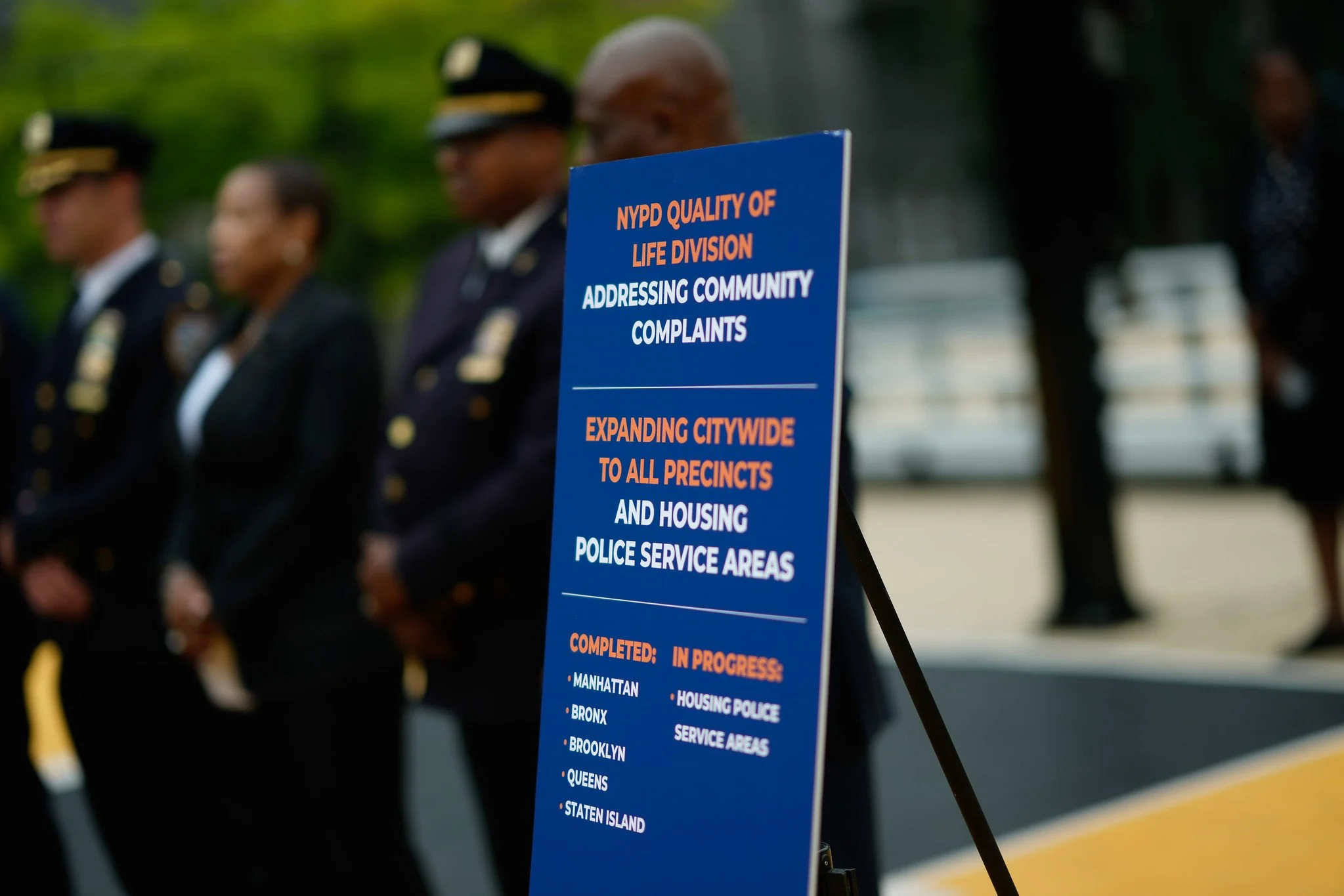
In August, Mayor Eric Adams and the NYPD rolled out new quality of life focused units to all of Queens. File photo by Michael Appleton/Mayoral Photography Office
The BP, who was once the chair of the City Council’s public safety committee, was a longtime fan of NCOs and their approach to community policing.
“I really felt that it was absolutely the closest we were going to get to community policing,” he said. “There were so many benefits, especially because they were doing a lot of the troubleshooting in communities. Rather than waiting for a politician to hold the town hall, they would hold their own, and those are some of the most well-attended police meetings…bringing in a whole new group of residents to address their issues.”
Now, he worries that the Q-Teams won’t address those same concerns.
“I think this program is not community policing,” he said. “I think it's a response to quality-of-life issues, but it doesn't build trust with Officer Ronnie, who's walking the beat every day on Merrick Boulevard or Jamaica Avenue to address issues and build trust with the community.”
“You get to know these officers, and then all of a sudden, they're gone,” he added.
According to Richards, Q-Team officers have been present as several recent community meetings in Queens and locals have sung their praises.
“I'm not here to say that they're not doing their job,” he said. “They did a lot of troubleshooting.”
Since officers previously assigned as NCOs are being looped into the Q-Teams, it is unclear if some of their community relations and efforts will translate under the new mandate, but some locals hope they do.
“The intention is that the connection will be there,” said Queens Community Board 12 Chair Reverend Carlene Thorbs.
“From what we understand, the situations that they're going to see, the situations that they're going to have to deal with, they're going to have to work with multiple agencies, and to be honest, that's what the NCOs should have been doing,” Thorbs added. “It's just about implementation. Will officers go the extra mile? because that's what's needed when you're dealing with calling agencies because of ongoing situations.”
Thorbs hopes that the officers who were once NCOs carry their community efforts into their new assignment.
“It's all about the mindset of the officers,” she said. “I'm hoping, and I figure, that they will bring that along with them.”