Over 90 percent of court summons were dismissed without conviction, new report shows
/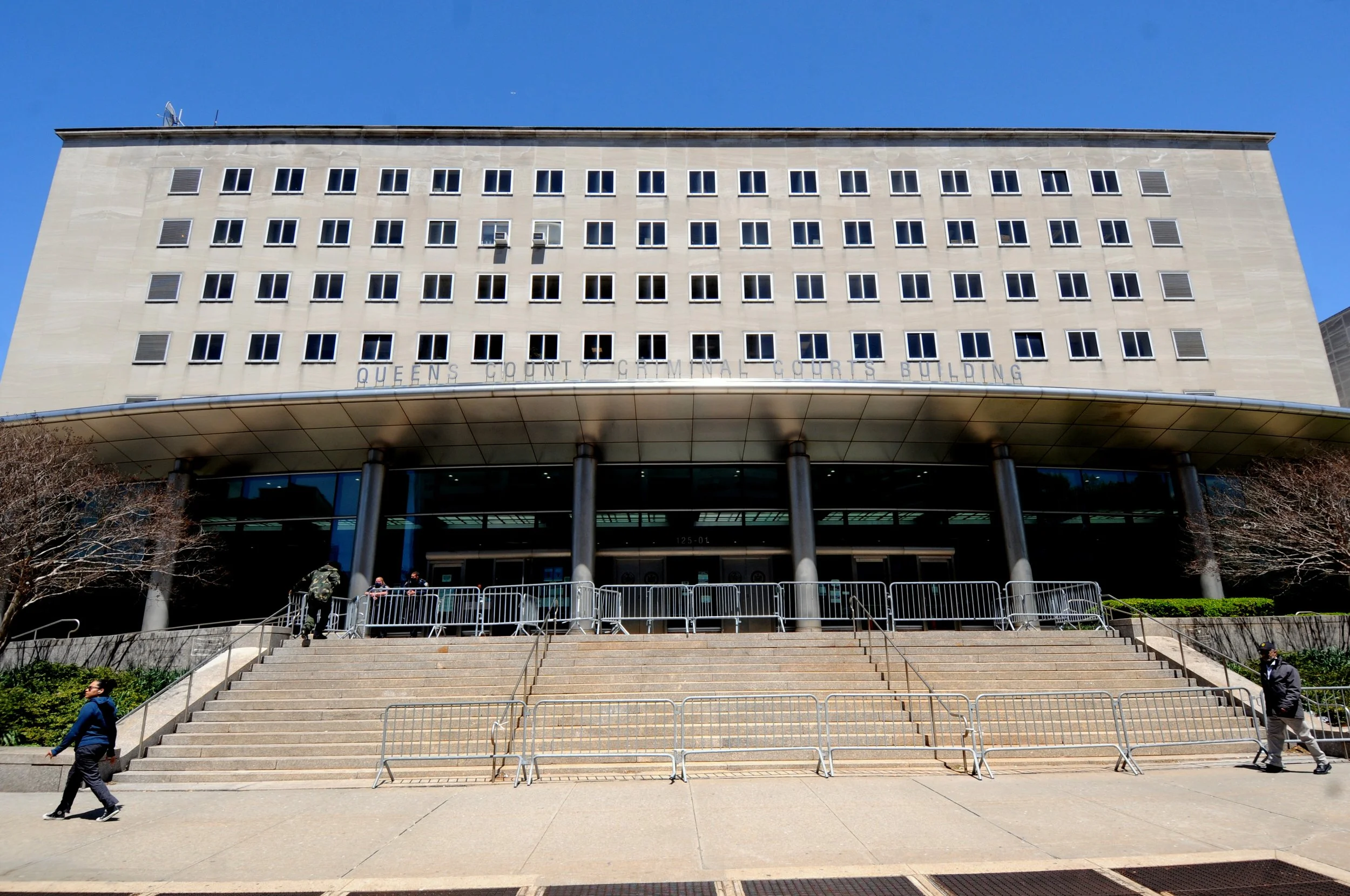
A new report from John Jay College’s Data Collaborative for Justice showed that over half of court summonses issued by the NYPD in 2024 were thrown out because of technical errors or legal insufficiency. Eagle file photo by Walter Karling
By Noah Powelson
New York City courts threw out over half of all criminal summonses issued in 2024, largely due to paperwork errors and legal insufficiencies, a new report released this week shows.
According to a new research brief from John Jay College’s Data Collaborative for Justice, 69 percent of all court summonses in the city were immediately dismissed at a court hearing last year. What’s more, the report also showed that Black and brown communities were disproportionately the subject of defective court summonses.
A record-breaking 20 percent of all city court summonses were defective in 2024, meaning they were rejected prior to arraignment due to a technical issue. In 2023, 16 percent were defective, the previous highest amount in the decade prior.
The majority of the defective summonses were thrown out because the city missed the deadline to submit the summons to the court within 20 days.
Of the remaining cases that were heard in court, judges dismissed 45 percent for legal insufficiency, dismissed 24 percent on other grounds, and resolved 22 percent with an adjournment in contemplation of dismissal.
In total, only nine percent of all court summonses in 2024 resulted in a conviction.
The authors of the study have accused the city of operating on a “process as punishment” model, where the faulty or inefficient summons are used not to prosecute legitimate crimes but instead waste time, collect small fines and, in general, add needless stress to New Yorkers. Those who are financially insecure are therefore disproportionately affected by these time-wasting court summonses, the report said.
“We had mainly intended to lay out the latest criminal summons totals and the magnitude of any racial disparities through 2024,” Michael Rempel, executive director of the Data Collaborative for Justice, said in a statement. “What we didn’t expect was how much the data around court outcomes would jump off the page. It’s bizarre that nearly two-thirds of 2024 summonses were essentially dismissed for paperwork or basic legal insufficiency errors.”
The impact on communities of color is especially clear when examining the disparity in the rate of court summonses between white, Black and Hispanic New Yorkers. Across the city, 78 percent of all summonses in 2024 were issued to Black or Hispanic people, according to the report.
Racial disparity in summonses has generally declined or remained mostly stagnant in recent years, except in Queens where a noticeable increase is taking place.
In Queens, Black New Yorkers received 12.7 times as many court summonses as their white neighbors. Though the disparity between Black and white Queens residents was the lowest it had ever been in years by the end of 2023, the rates more than doubled the following year.
The rate of disparity between Hispanic and white Queens residents jumped significantly higher over the past three years, as well.
“Despite a citywide decline in racial disparities, Queens saw a sharp increase, with Hispanic residents receiving summonses at a rate 11.4 times higher than white residents in 2024, compared to 5.5 times higher in 2021,” the report stated.
The trend was especially visible in high-income neighborhoods. According to the report, while Black or Hispanic people make up only 16 percent of the population in neighborhoods with a median household income over $125,000, 64 percent of all 2024 summonses were issued to these neighborhoods’ residents.
But the disparity was greatest in low-income neighborhoods. According to the report, Black and Hispanic residents in neighborhoods with a median income under $50,000 per year received 95 percent of all summonses issued in 2023 and 2024.
The NYPD did not respond to an Eagle inquiry for this story.
Notably, summonses were down overall compared to previous years.
The NYPD issued 90,054 summonses in 2023, more than double the number of summonses in 2022 and over three and a half times the amount in 2021. In 2024, 78,848 summonses were issued, a roughly 12 percent decline. However, the amount of summonses handed out in 2024 was still more than three times higher than the low of 24,854 summonses in 2021.
With the exception of Manhattan, every borough saw a decline in their docketed summons numbers from 2023 to 2024 – Manhattan grew by 31 percent.
Current summons rates are still significantly lower than they were when former Mayor Michael Bloomberg was finishing his last year in office. In 2013, the NYPD had issued over 390,000 summonses that year alone.
Most summonses in 2024 were issued for minor driving violations or petty crimes such as public consumption of alcohol. From 2021 to 2023, criminal summonses for an open container of alcohol increased by 924 percent and accounted for 27 percent of the 2023 total.
In 2024, 17 percent of all summonses issued for Vehicle and Traffic Law charges, up from 8 percent in 2019. Of those the Vehicle and Traffic Law summonses charges 30 percent were for a suspended registration 2024.
Disorderly conduct was the next most common summons charge in 2024, also at 17 percent. In 2019, disorderly conduct made up 13 percent of summonses.
“It is concerning that so many summonses are dismissed now due to being legally insufficient, especially when people may have to take a day off from work to sit in court,” said Anna Stenkamp, senior research associate at the Data Collaborative for Justice. “The time and resources this takes emphasizes the focus on the quantity of summonses issued over the quality and is a trend that appears to be worsening over the last few years.”
The Office of Court administration did not respond to an Eagle inquiry for this story.